
 +91 9979 535 626
Zhulelal : ZL-0002
For Sindhi Hindus, Jhulelal is a name that refers to the Ishta Dev (most-revered deity) of Sindhi Hindus, who regard him to be an incarnation of the Hindu deity Varuna.The chant Jhule Lal Jhule Lal is considered the “clarion call” of Sindhi Hindus.
Jhulelal is traditionally believed to have performed several miracles, typically centred around the Indus River – which Hindus consider to be his abode.Sindhi Hindus worship Jhulelal at the Shrine at Odero Lal in Pakistan’s Sindh province, which is jointly used by Hindus, and Sindhi Muslims who revere the shrine as the tomb of Sheikh Tahir.
- Enquire about Product
Enquire about Zhulelal : ZL-0002
Related Products
-

Laxmi Maa : LX-0002
Lakshmi is also called Sri or Thirumagal because she is endowed with six auspicious and divine qualities, or gunas, and is the divine strength of Vishnu. In Hindu religion, she was born from the churning of the primordial ocean (Samudra manthan) and she chose Vishnu as her eternal consort.When Vishnu descended on the Earth as the avatars Rama and Krishna, Lakshmi descended as his respective consort.In the ancient scriptures of India, all women are declared to be embodiments of Lakshmi.The marriage and relationship between Lakshmi and Vishnu as wife and husband is the paradigm for rituals and ceremonies for the bride and groom in Hindu weddings. Lakshmi is considered another aspect of the same supreme goddess principle in the Shaktism tradition of Hinduism
Lakshmi is depicted in Indian art as an elegantly dressed, prosperity-showering golden-coloured woman with an owl as her vehicle, signifying the importance of economic activity in maintenance of life, her ability to move, work and prevail in confusing darkness.She typically stands or sits like a yogin on a lotus pedestal and holds lotus in her hand, a symbolism for fortune, self-knowledge and spiritual liberation.Her iconography shows her with four hands, which represent the four goals of human life considered important to the Hindu way of life: dharma, k?ma, artha, and moksha.
-
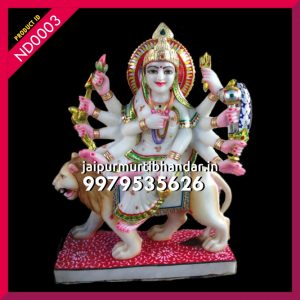
Navdurga Maa : ND-0003
Navdurga, are the nine forms of Durga collectively worshipped by Shakti devotees. Scriptures differ in naming the nine incarnations. Pictures and paintings of the Nava-Durga also varies from region to region. The most widely accepted account of the nine forms of Durga is the one found in the Devi Mahatmya ? Sailaputri, Brahmacharini, Chandraghanta, Kushmanda, Skanda Mata, Katyayani, Kalaratri, Maha Gowri and Siddhidayini.
The nine forms of Durga are worshipped during the nine days of Navratri. -
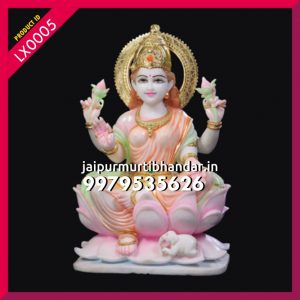
Laxmi Maa : LX-0005
Lakshmi is also called Sri or Thirumagal because she is endowed with six auspicious and divine qualities, or gunas, and is the divine strength of Vishnu. In Hindu religion, she was born from the churning of the primordial ocean (Samudra manthan) and she chose Vishnu as her eternal consort.When Vishnu descended on the Earth as the avatars Rama and Krishna, Lakshmi descended as his respective consort.In the ancient scriptures of India, all women are declared to be embodiments of Lakshmi.The marriage and relationship between Lakshmi and Vishnu as wife and husband is the paradigm for rituals and ceremonies for the bride and groom in Hindu weddings. Lakshmi is considered another aspect of the same supreme goddess principle in the Shaktism tradition of Hinduism
Lakshmi is depicted in Indian art as an elegantly dressed, prosperity-showering golden-coloured woman with an owl as her vehicle, signifying the importance of economic activity in maintenance of life, her ability to move, work and prevail in confusing darkness.She typically stands or sits like a yogin on a lotus pedestal and holds lotus in her hand, a symbolism for fortune, self-knowledge and spiritual liberation.Her iconography shows her with four hands, which represent the four goals of human life considered important to the Hindu way of life: dharma, k?ma, artha, and moksha.
-
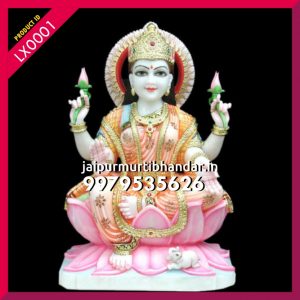
Laxmi Maa : LX-0001
Lakshmi is also called Sri or Thirumagal because she is endowed with six auspicious and divine qualities, or gunas, and is the divine strength of Vishnu. In Hindu religion, she was born from the churning of the primordial ocean (Samudra manthan) and she chose Vishnu as her eternal consort.When Vishnu descended on the Earth as the avatars Rama and Krishna, Lakshmi descended as his respective consort.In the ancient scriptures of India, all women are declared to be embodiments of Lakshmi.The marriage and relationship between Lakshmi and Vishnu as wife and husband is the paradigm for rituals and ceremonies for the bride and groom in Hindu weddings. Lakshmi is considered another aspect of the same supreme goddess principle in the Shaktism tradition of Hinduism
Lakshmi is depicted in Indian art as an elegantly dressed, prosperity-showering golden-coloured woman with an owl as her vehicle, signifying the importance of economic activity in maintenance of life, her ability to move, work and prevail in confusing darkness.She typically stands or sits like a yogin on a lotus pedestal and holds lotus in her hand, a symbolism for fortune, self-knowledge and spiritual liberation.Her iconography shows her with four hands, which represent the four goals of human life considered important to the Hindu way of life: dharma, k?ma, artha, and moksha.
-
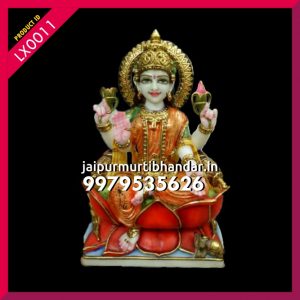
Laxmi Maa : LX-0011
Lakshmi is also called Sri or Thirumagal because she is endowed with six auspicious and divine qualities, or gunas, and is the divine strength of Vishnu. In Hindu religion, she was born from the churning of the primordial ocean (Samudra manthan) and she chose Vishnu as her eternal consort.When Vishnu descended on the Earth as the avatars Rama and Krishna, Lakshmi descended as his respective consort.In the ancient scriptures of India, all women are declared to be embodiments of Lakshmi.The marriage and relationship between Lakshmi and Vishnu as wife and husband is the paradigm for rituals and ceremonies for the bride and groom in Hindu weddings. Lakshmi is considered another aspect of the same supreme goddess principle in the Shaktism tradition of Hinduism
Lakshmi is depicted in Indian art as an elegantly dressed, prosperity-showering golden-coloured woman with an owl as her vehicle, signifying the importance of economic activity in maintenance of life, her ability to move, work and prevail in confusing darkness.She typically stands or sits like a yogin on a lotus pedestal and holds lotus in her hand, a symbolism for fortune, self-knowledge and spiritual liberation.Her iconography shows her with four hands, which represent the four goals of human life considered important to the Hindu way of life: dharma, k?ma, artha, and moksha.
